






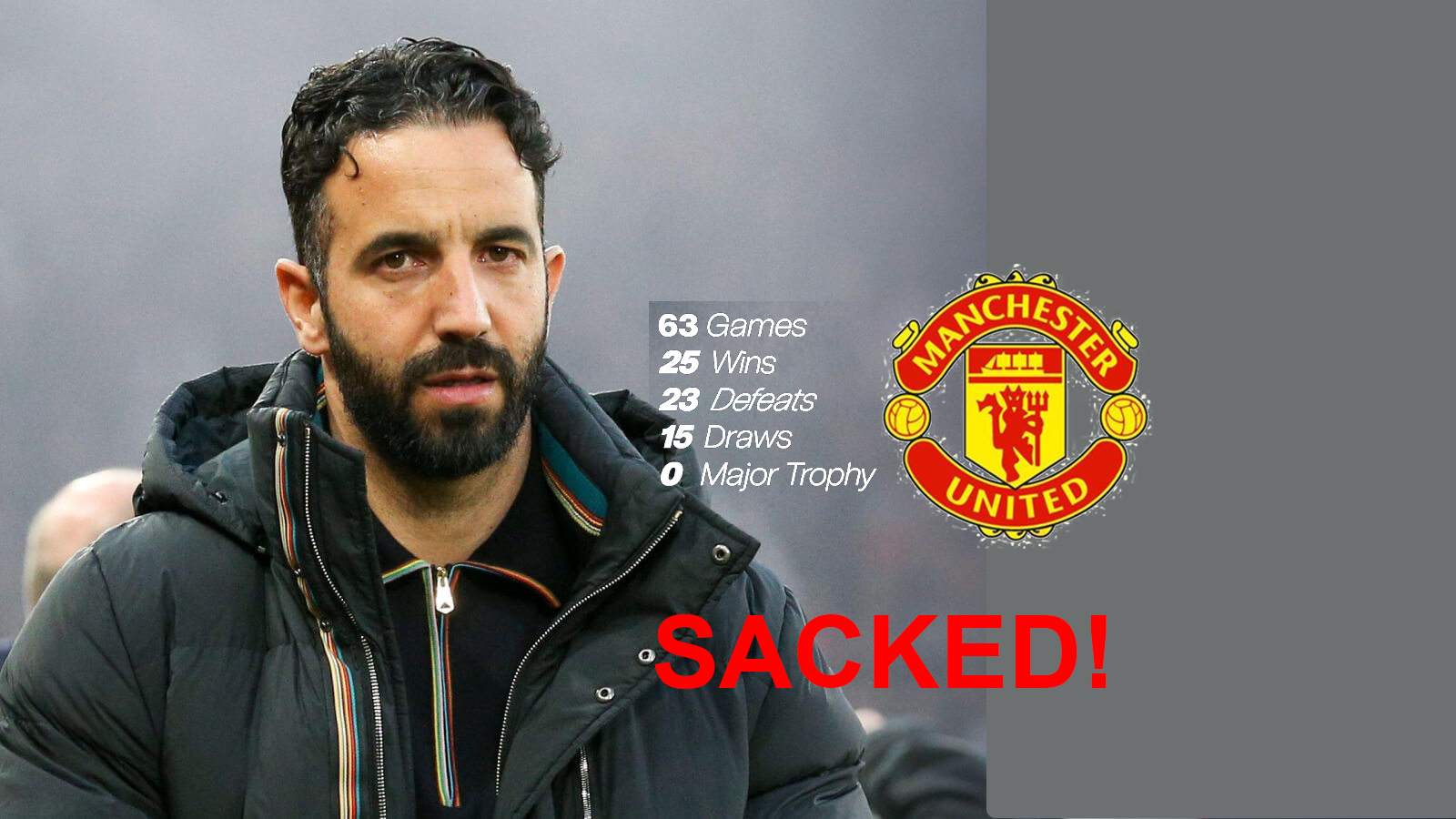
Manchester United have officially parted ways with Rúben Amorim, bringing an abrupt end to a managerial chapter that promised much but ultimately failed to deliver long-term stability at Old Trafford. The club confirmed the decision on January 5, 2026, just a day after a frustrating league draw that proved to be Amorim’s final match in charge.
Why Manchester United Pulled the Plug
Amorim’s dismissal was not the result of one bad game, but rather a series of unresolved issues that built up over time. While United remained within touching distance of the European places, performances lacked consistency, identity, and momentum. Internally, tensions grew between the Portuguese coach and senior club executives, particularly regarding transfer control and decision-making authority.
Amorim was reportedly unhappy with his limited influence over recruitment and squad planning, a frustration he did little to hide in public comments. His candid approach, while admired by some fans, did not sit well with the club’s leadership and gradually strained relationships behind the scenes.
Results That Failed to Convince
On the pitch, Manchester United showed flashes of promise under Amorim, including a handful of impressive victories and tactical improvements in certain matches. However, these moments were often followed by disappointing performances, leaving supporters unsure of the team’s direction.
A poor run of form in recent weeks — including dropped points against mid-table rivals — intensified pressure on the club to act. Despite sitting sixth in the Premier League at the time of his dismissal, the board felt progress was not strong enough to justify continuing with the project.
Reaction from Fans and the Football World
The decision has divided opinion among supporters. Some believe Amorim was not given enough time to fully implement his ideas, especially considering the ongoing structural changes at the club. Others argue that Manchester United could not afford another prolonged rebuilding phase without clear signs of success.
Pundits have also pointed to the broader issues at Old Trafford, noting that frequent managerial changes have become a worrying pattern since the departure of Sir Alex Ferguson. Amorim’s exit marks yet another attempt to reset the club’s trajectory.
What Comes Next for United
With Amorim gone, Manchester United once again find themselves at a crossroads. An interim coaching setup has been put in place as the club searches for a new manager capable of restoring consistency, unity, and belief.
The next appointment will be crucial — not just tactically, but culturally. United’s leadership must now decide whether to hand greater authority to the next manager or maintain the modern head-coach model that has already caused friction.
Short Biography: Rúben Amorim
Rúben Filipe Marques Amorim, born on January 27, 1985, in Lisbon, Portugal, is a former professional footballer turned coach. As a player, he represented several Portuguese clubs and earned international caps for Portugal.
Amorim rose to prominence as a manager at Sporting CP, where he achieved legendary status by leading the club to a long-awaited league title and establishing a reputation for tactical intelligence, discipline, and bold decision-making.In November 2024, he was appointed head coach of Manchester United, marking his first major managerial role outside Portugal. His time at Old Trafford lasted just over a year, filled with ambition, controversy, and ultimately an early exit that reflects the intense pressure of managing one of football’s most demanding clubs.